
Puppy Crate Training: Surviving Night One Without the Crying
Looking for the specific tools I use with Charlie? Check out my Master Gear Page for my top-rated Goldendoodle supplies, from grooming tools to training crates.
If you ask any new puppy owner what they dread most about the first week, it’s always "the crying." There is something uniquely heart-wrenching about the high-pitched whine of a puppy who misses their littermates. When I brought Charlie home, I knew that if I didn't handle the first night correctly, I’d be setting us up for weeks of sleep deprivation.
As a professional breeder, I don’t believe in just "letting them cry it out." That creates anxiety. Instead, I use a method that builds confidence and teaches the puppy that the crate is the safest place in the world. Here is exactly how I handled Charlie’s first night to ensure a quiet house.
Location, Location, Location
The biggest mistake people make on night one is putting the crate in the laundry room or the basement. Charlie had never been alone in his life; putting him in a dark, isolated room is a recipe for a panic attack.
For the first week, I kept Charlie’s crate right next to my bed.
He could hear my breathing.
He could smell that I was nearby.
If he started to get restless, I could simply put a hand against the crate to soothe him without having to get out of bed.
The "Den" Setup
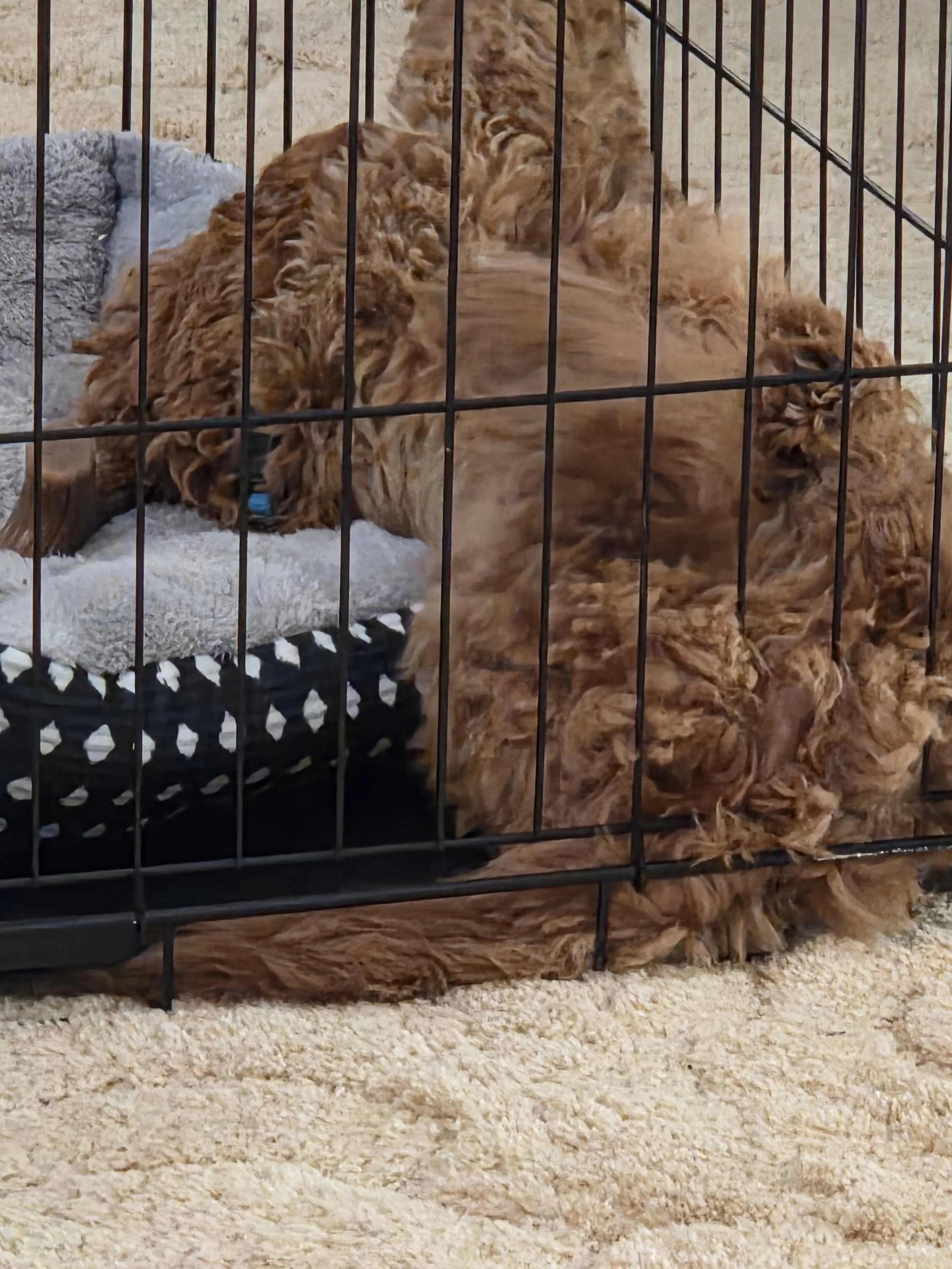
A crate shouldn't feel like a cage; it should feel like a den. I used a wire crate with a divider so Charlie didn't have enough room to have an accident in one corner and sleep in the other.
I’m very picky about what goes inside the crate for safety reasons. I used a thin, durable pad and a heartbeat sheep toy that mimics the warmth and sound of his littermates. I’ve linked the specific "Heartbeat Sheep" and the durable crate I use for all my puppies on my Gear Page. These small investments are what make the transition from breeder to home actually work.
The Pre-Sleep Ritual
You cannot take a hyper, over-stimulated puppy and expect them to sleep. An hour before bedtime, I engaged Charlie in some very light "brain work." We practiced a few "Sits" and "Touches" to tire out his mind.
Then, 20 minutes before lights out, we did the Final Potty Run. I made sure he actually finished his business so I knew that any crying later wasn't because of a full bladder.
How I Handled the Noise
Charlie did whine for about 10 minutes that first night. Instead of talking to him (which he would see as a reward for crying), I stayed silent. However, if he escalated to a frantic bark, I followed the "Boring Potty Break" rule.
No lights, no "baby talk," no cuddling.
Straight outside to his spot.
Wait 3 minutes.
If he goes, a tiny whisper of "Good boy."
Straight back into the crate.
By making the middle-of-the-night interaction as boring as possible, Charlie quickly realized that crying didn't get him a play session—it only got him a bathroom break.
Building Long-Term Success
Crate training is a marathon. While night one was a success, we continued to work on "Crate Games" during the day so he never associated the crate only with me leaving or the sun going down.
If you’re struggling to get your puppy to settle, or if the crying has been going on for more than a few nights, you’re likely missing a key step in the "denning" instinct. I walk you through my exact 7-day crate training schedule in the Puppy Foundations module of my Goldendoodle Academy. For $45, it’s the fastest way to get a full night’s sleep.
Surviving the first night is just the beginning. Make sure you have a plan for the rest of the First 48 Hours with Your New Goldendoodle.
Final Thoughts
The first night is about building trust. If your puppy knows you are there and that their needs are met, the crying will stop. Stay consistent, keep the crate close, and don't give in to those puppy dog eyes at 3:00 AM!