
Safe Chew Toys for Goldendoodles: A Breeder’s Guide to Quality
Looking for the specific tools I use with Charlie? Check out my Master Gear Page for my top-rated Goldendoodle supplies, from grooming tools to training crates.
If you’ve ever walked down the toy aisle at a major pet store, you’ve seen the mountain of plushies, squeakers, and bright plastic bones. It’s tempting to grab the cutest one, but as a professional breeder and trainer, I look at toys differently. I don't see "cute"—I see potential choking hazards, digestive blockages, and broken teeth.
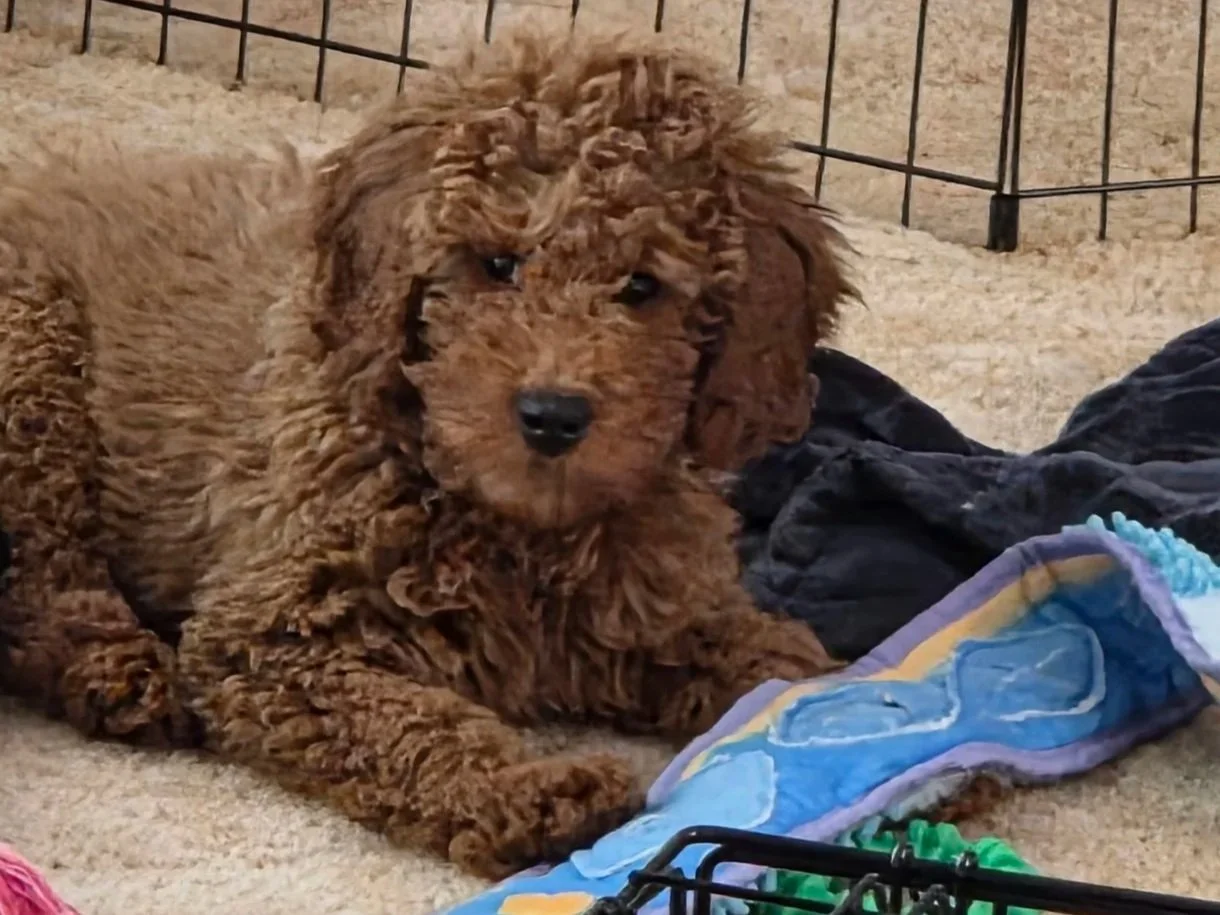
When I brought Charlie home, I knew his "needle teeth" phase would be intense. Mini Goldendoodles are smart and mouthy, which means they need to chew to relieve stress and explore their world. However, I have a very strict set of criteria for what gets past the gate and into Charlie’s mouth.
The "Thumbnail" Test for Hardness
One of the biggest mistakes owners make is buying toys that are too hard. If a toy is hard enough that it doesn't give at all when you press your thumbnail into it, it’s probably hard enough to fracture a puppy's tooth.
I avoid real animal bones and hard nylon chews that have zero "give." For Charlie, I stick to high-quality, natural rubber toys. They are durable enough to stand up to his chewing but have enough flexibility to protect his developing adult teeth.
Playing in the house is one thing, but for the outdoors, you'll need the right Harness for Goldendoodles that Pull.
Sourcing and Materials: Why Quality Matters
As someone who looks closely at the quality of everything I bring into my home, I am very wary of cheap toys made with "mystery" plastics or dyes. Many low-cost dog toys are manufactured with lead, phthalates, or BPA—chemicals you definitely don't want Charlie ingesting.
I only source toys made from non-toxic, food-grade materials. I’ve curated a list of the exact brands I’ve used for years on my Gear Page. These are toys that don't crumble into small, swallowable pieces the second a Goldendoodle gets a grip on them.
Size and Shape: Preventing the "Gulp"
Charlie is a Mini Goldendoodle, but he has a big personality and a surprisingly wide jaw. I never give him a toy that is small enough to fit completely behind his back molars. If a toy is too small, it can easily become a choking hazard or cause an intestinal blockage if swallowed.
I also avoid toys with small parts that can be chewed off, like plastic eyes on plushies or "jingler" bells inside balls. If it has a seam that looks like it could pop, it doesn't stay in the Puppy Zone.
Interactive vs. Solo Toys
I categorize Charlie’s toys into two groups:
Interactive Toys: Tugs and balls that we only play with together. This builds our bond and ensures he doesn't shred them when I'm not looking.
Solo Chews: Durable rubber toys (like the ones you can stuff with food) that I give him when he needs to settle on his "Place."
Using toys as a reward is a huge part of my training philosophy. If you’re struggling to get your puppy to focus, you might be using the wrong "currency." I talk about how to use toys to drive focus and stop destructive chewing in the Puppy Foundations module of my Goldendoodle Academy. For $45, you'll learn how to turn play into a powerful training tool.
Final Thoughts
A safe toy is an investment in Charlie’s health and your furniture’s survival. Don't settle for the cheap bin at the grocery store. Stick to high-quality rubber, check for "give," and always supervise your puppy during play. Check out my Gear Page for the toys that have survived the "Charlie Test"!