
Goldendoodle Puppy Starter Kit: The Essentials for New Owners
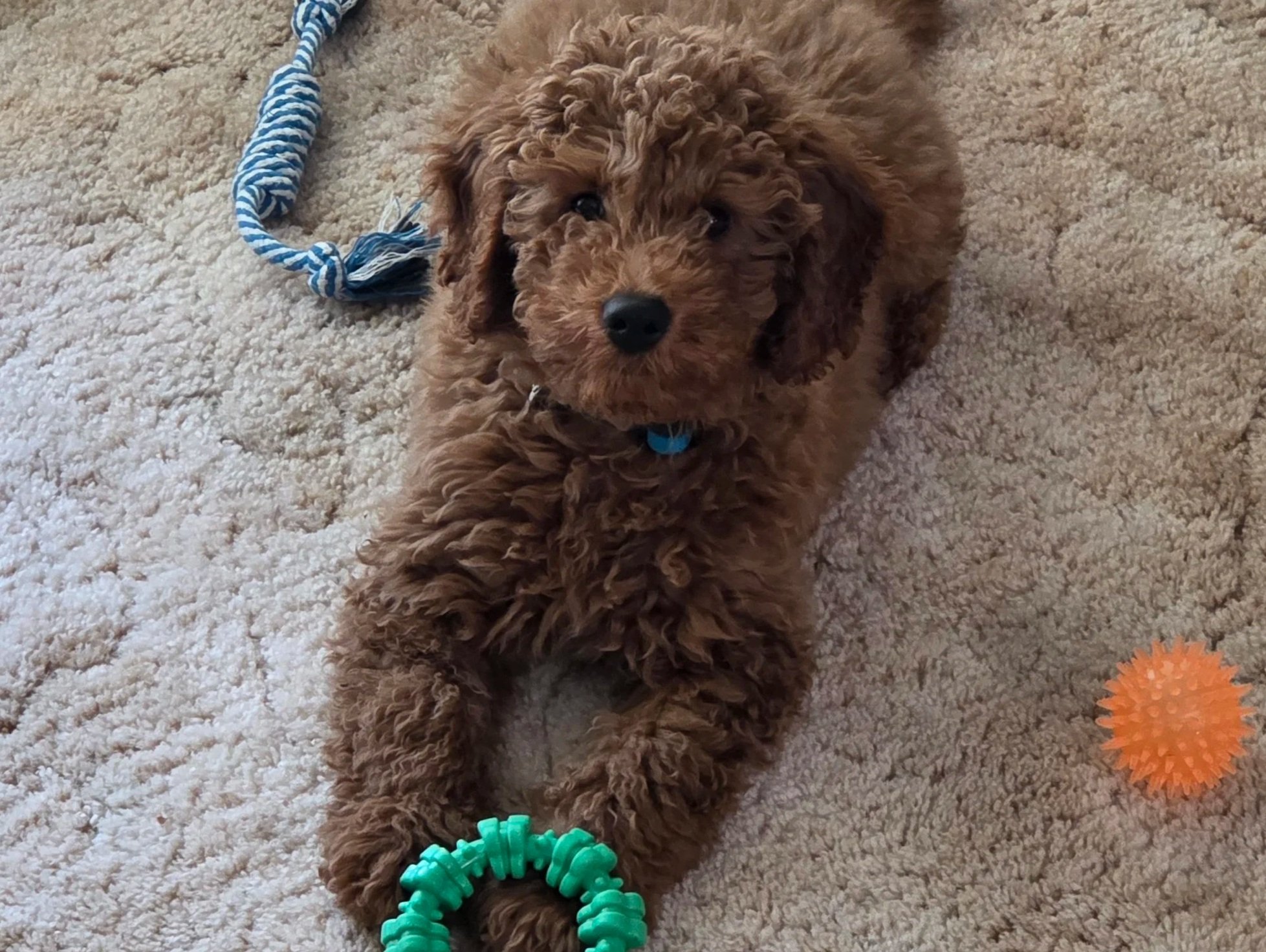
Looking for the specific tools I use with Charlie? Check out my Master Gear Page for my top-rated Goldendoodle supplies, from grooming tools to training crates.
Whenever one of my puppies is ready to head to their forever home, the owners always ask me for a shopping list. It’s easy to get sucked into buying every cute toy and high-tech gadget on the market, but the truth is, a puppy only needs a few high-quality essentials to thrive. When I brought Charlie home, I kept it simple, focusing on durability and training utility.
As a professional breeder, I’ve seen what lasts and what ends up in the trash within a week. If you are preparing for a new Mini Goldendoodle, or if you’ve just brought one home and feel overwhelmed, here is my "tried and true" Starter Kit.
1. The Safety Foundation: Crate and Gates
Before Charlie even stepped paw in my house, I had his "Puppy Zone" set up. You cannot successfully potty train or keep a puppy safe without containment.
The Crate: I use a heavy-duty wire crate with a divider. It’s the only one you’ll ever need to buy.
The Gates: I recommend metal, walk-through tension gates. They are much sturdier than the plastic ones that a 13-week-old Doodle can easily knock over.
2. Grooming: The Non-Negotiables
Doodle coats are unique. If you don't have the right tools from the start, you’re already behind.
Long-Pin Slicker Brush: To get through the fluff to the skin.
Stainless Steel Comb: To check for the tiny mats that the brush misses. You can find the exact grooming set I use on Charlie—tools that actually stand up to the "breeder standard"—linked on my Gear Page.
Remember, the right tools only work if you know how to use them. Start with a solid foundation by learning Why Most Brushes Fail.
3. Nutrition and Mealtime
Goldendoodles can have sensitive stomachs, so I am very picky about what Charlie eats out of.
Stainless Steel Bowls: They are more hygienic and durable than plastic, which can harbor bacteria and scratches.
Slow Feeder: Charlie used to inhale his food. Using a slow-feeder bowl turned mealtime into a 10-minute "brain game" instead of a 30-second sprint.
4. Training Gear: Communication is Key
You need a way to talk to your dog.
6-Foot Nylon Leash: Skip the retractable leashes; they teach puppies to pull. A fixed-length leash gives you better control.
Training Treats: I look for "high-value," small, soft treats that Charlie can swallow quickly so we don't break the flow of our training sessions.
I’ve compiled this entire "Starter Kit" list—the exact brands and models I trust for Charlie—over on my Gear Page. These aren't just random recommendations; they are the tools I use every single day in my professional program.
The Most Important "Item" Isn't in a Box
You can have all the best gear in the world, but if you don't have a plan to use it, you’ll still struggle. The most important part of my starter kit is actually the information.
When I brought Charlie home, I didn't just have the gear; I had the system. That system is what I’ve built into the Puppy Foundations module of my Goldendoodle Academy. For $45, you get the digital "instruction manual" for your puppy that the pet stores don't sell. It covers everything from how to set up that crate to how to use those training treats to get a perfect "Sit."
Final Thoughts
Buying for a new puppy should be exciting, not stressful. Stick to the essentials, prioritize quality over quantity, and focus on gear that helps you build a better relationship with your dog. Check out my Gear Page to see the full kit, and I’ll see you inside the Academy!