
Goldendoodle Teenage Phase: Navigating Adolescent Regression & Training Tips
Looking for the specific tools I use with Charlie? Check out my Master Gear Page for my top-rated Goldendoodle supplies, from grooming tools to training crates.
You were so proud. At four months old, your Goldendoodle had a perfect "Sit," came when called, and was the star of the neighborhood. Then, seemingly overnight, the "perfect puppy" disappeared. Now, your 7-month-old is ignoring commands, "counter surfing" for snacks, and barking at shadows.
Welcome to Adolescence.
As an IACP-certified trainer, I call this the "The Great Regression." It is the most common time for dogs to be surrendered to shelters because owners think the training "didn't stick." In this guide, I’m explaining the biology of the teenage Doodle and how to stay the course until the adult brain arrives.
1. The Biology of the "Teenage Brain"
Between 6 and 14 months, your Goldendoodle is undergoing a massive neurological renovation.
The Prefrontal Cortex: The part of the brain responsible for "impulse control" is temporarily under construction.
Hormonal Surges: Even in spayed or neutered dogs, there is a massive shift in hormones that increases "Environmental Awareness" (and the desire to investigate everything).
Neural Pruning: The brain is literally "pruning" old connections to make room for adult ones. If you don't use a command during this phase, the brain might literally "delete" it.
2. The Regression Checklist: Is Your Teenager Testing You?
Adolescence looks different for every dog, but for Goldendoodles, it usually shows up in these four ways.
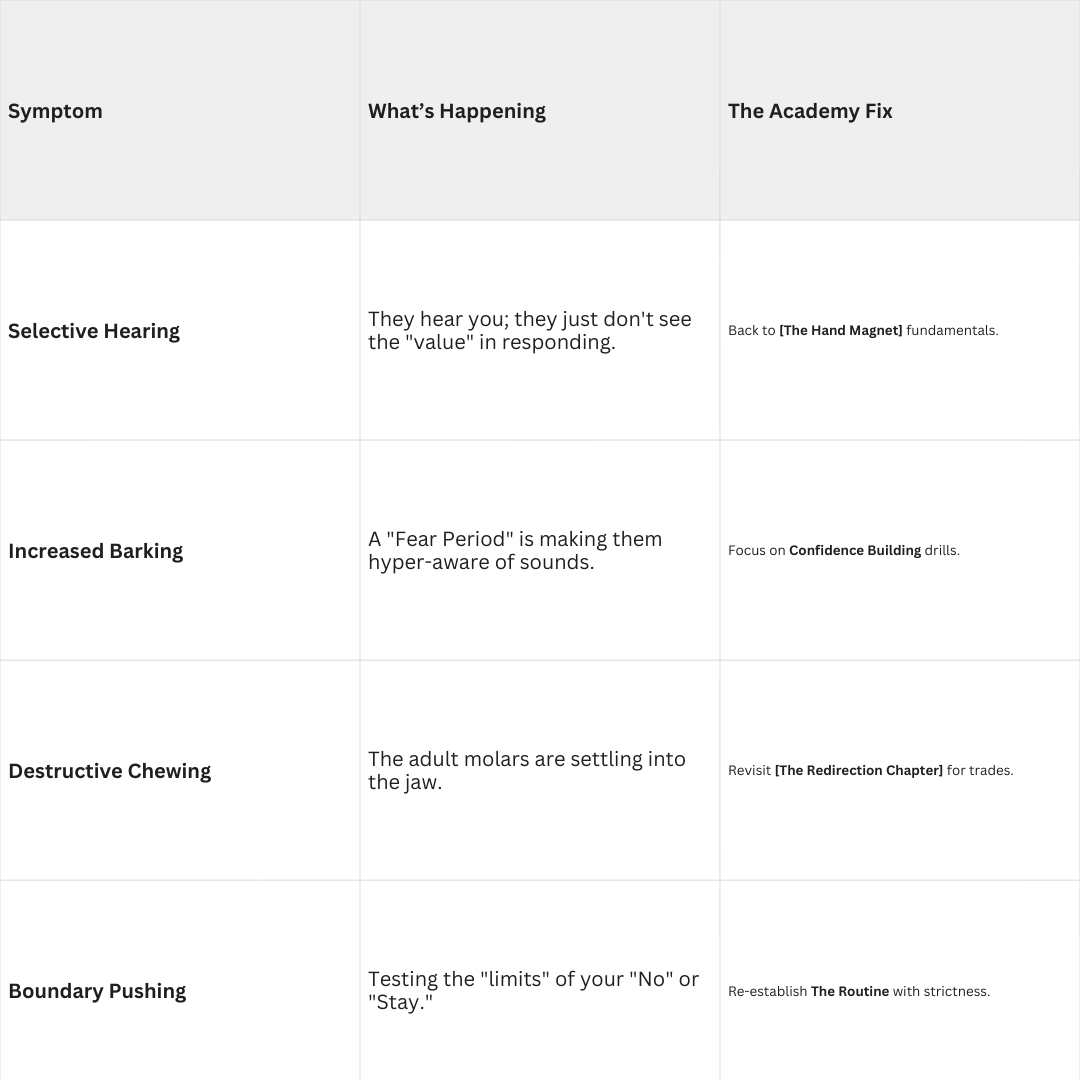
3. Don't Give More Freedom—Give More Structure
The biggest mistake owners make during the teenage phase is giving the dog more freedom because they are bigger. In reality, a teenage Goldendoodle needs more structure than a 10-week-old puppy.
The "Back to Basics" Protocol:
Long-Line Training: If your "Come" command has failed, your dog stays on a 15-foot long line. Never give a command you cannot physically enforce during this phase.
Short, Frequent Sessions: A teenager's attention span is shorter than a puppy's. Do five 2-minute sessions a day instead of one long 15-minute session.
Increase Mental Load: Use the Puppy Push-Up Flow to work their brain. A teenager with a tired brain is much less likely to "remodel" your baseboards.
4. The "Second Fear Period"
Around 6–10 months, many Doodles go through a second fear period. They may suddenly be terrified of a trash can they’ve walked past 100 times.
The Rule: Do not force them toward the object. Do not "coddle" the fear.
The Fix: Use "Parallel Play." Toss treats near the scary object until they choose to investigate it on their own terms.
5. Surviving Until the "Adult Brain" Arrives
Goldendoodles generally don't reach full emotional maturity until they are 2 years old. That means you have about 18 months of "construction" to navigate.
Inside the Ironstone Goldendoodle Academy, I have built a specific roadmap for navigating the teenage transition. We focus on "Proofing" your commands—ensuring your dog listens even when there’s a squirrel, a ball, or a new person nearby.
Consistency now leads to a perfect adult dog later. Don't quit during the renovation!