
Looking for the specific tools I use with Charlie? Check out my Master Gear Page for my top-rated Goldendoodle supplies, from grooming tools to training crates.
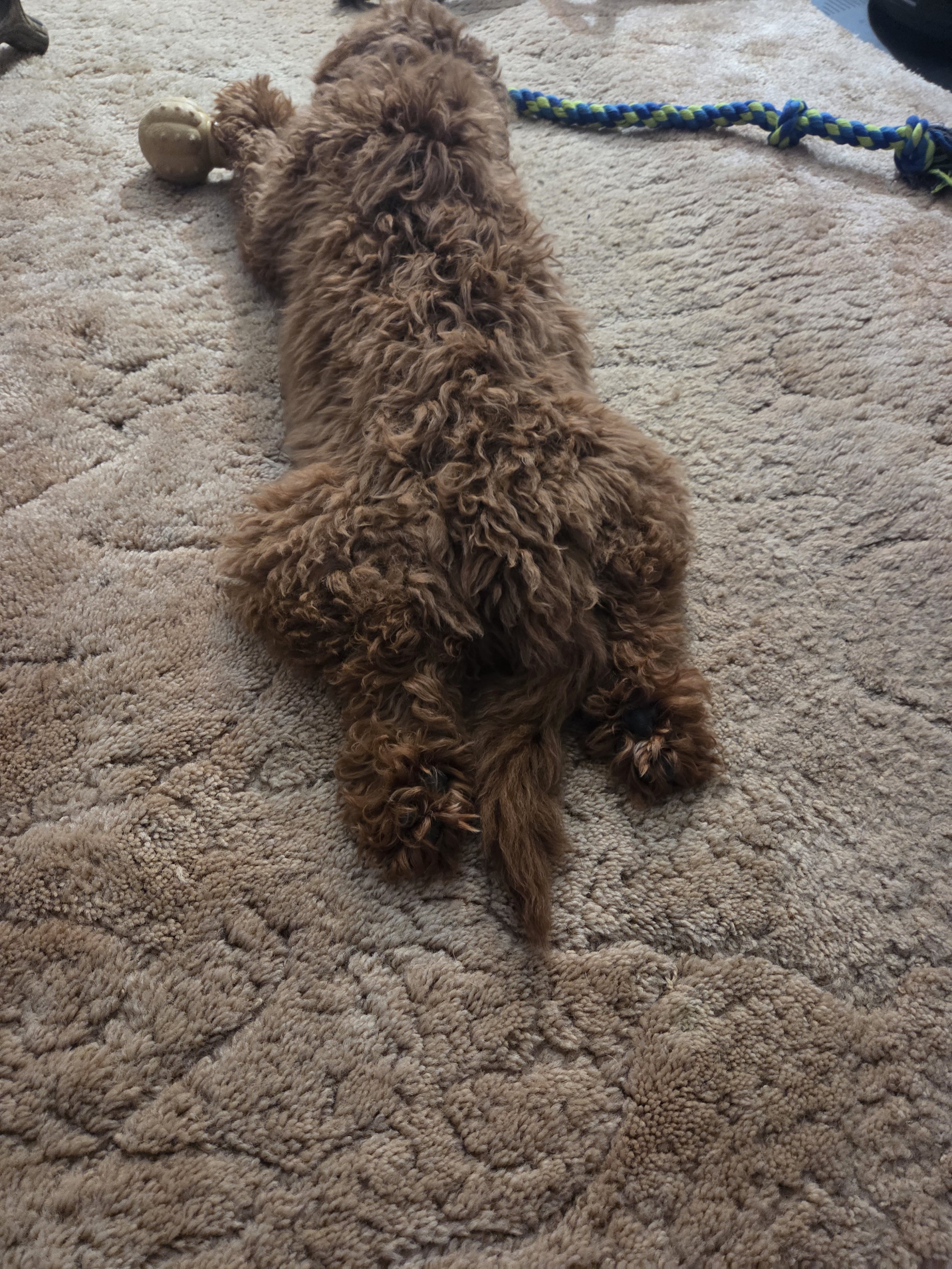
If you can’t walk into the kitchen, use the bathroom, or sit on the sofa without a fluffy shadow attached to your leg, you own a Velcro Dog.
Goldendoodles are bred for companionship. They are a mix of two of the most human-centric breeds in existence: the Golden Retriever and the Poodle. While this "Proximity Drive" is part of their charm, there is a fine line between a dog that loves you and a dog that cannot function without you.
In this guide, I’m breaking down why your Goldendoodle follows you everywhere and how to ensure their devotion doesn't turn into separation anxiety.
1. The Science of "Proximity Drive"
In my years of breeding and training, I’ve found that Goldendoodles don't just "want" to be near you; they feel a biological need to monitor their "safe person."
The Retriever's Loyalty: Retrievers were bred to work closely with hunters, constantly looking back for cues.
The Poodle’s Intelligence: Poodles are highly observant. They aren't just following you; they are "tracking" your routine to see what happens next.
The Result: A dog that is perpetually "on duty" as your shadow.
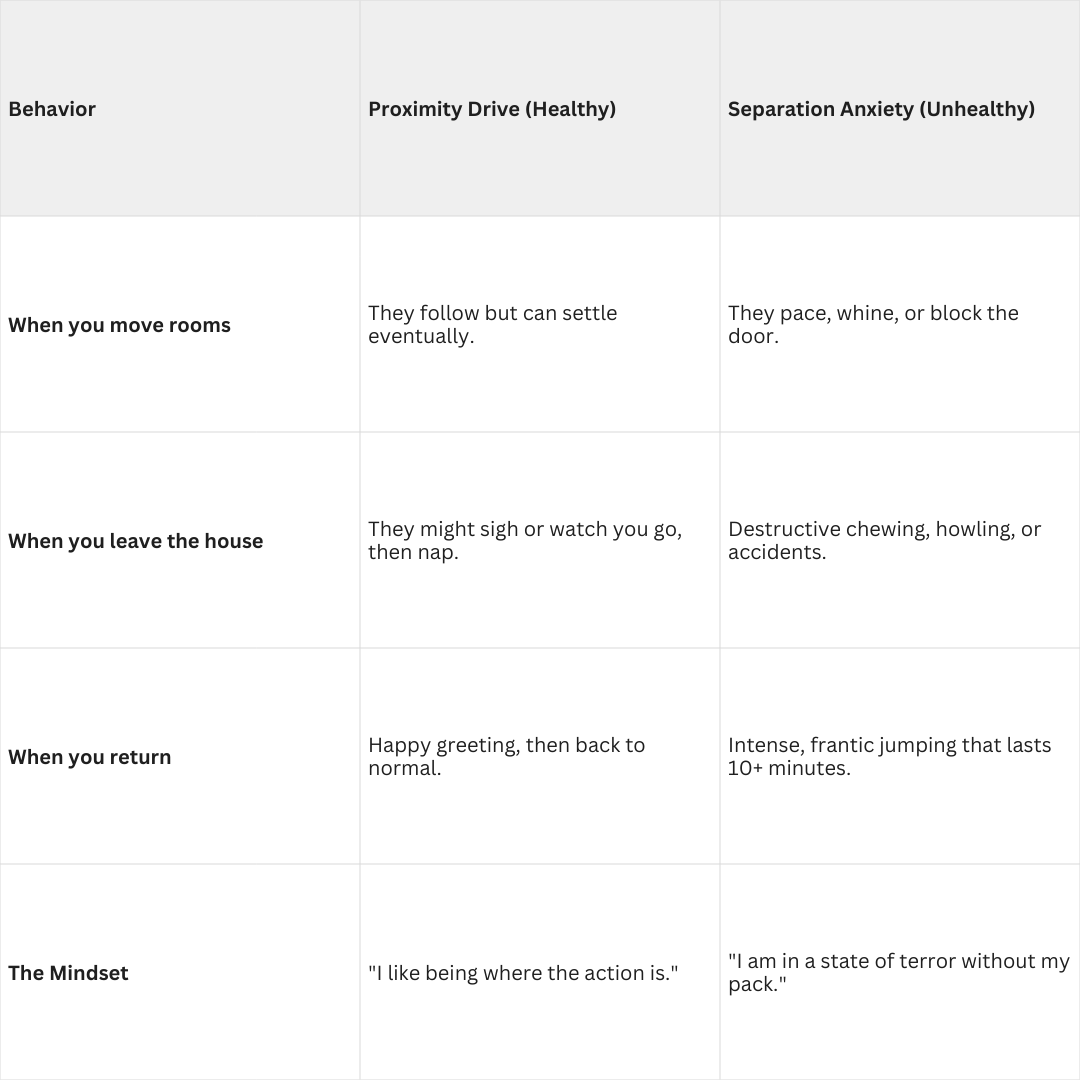
2. Proximity Drive vs. Separation Anxiety
It is vital to distinguish between a dog that prefers to be with you and a dog that is panicking when you are gone.
3. The "Independence Protocol": Training Your Shadow
To prevent a Velcro Dog from becoming a "Panicked Dog," we have to teach them that distance is safe.
Step 1: The Invisible Tether
Don't wait for your dog to stop following you. Instead, give them a "Place" command. While you are cooking or working, have them stay on a designated mat or bed in the same room, but not touching you. This teaches them to settle without physical contact.
Step 2: "Bathroom Breaks" (For You)
Start closing doors. It sounds simple, but a Goldendoodle that is never denied access to you will never learn "Isolation Distress" management. Go into a room, close the door for 30 seconds, and come back out when they are quiet.
Step 3: Mental Redirection
A Velcro Dog is often a bored dog. They follow you because you are the most interesting thing in the house. Provide Textured Enrichment Toys or a "Long-Term Chew" to occupy their Poodle brain while you are busy.
4. Why "Traditional" Comforting Backfires
When your puppy whines at the baby gate, your instinct is to go over and pet them. Don't. In the Goldendoodle brain, this reinforces the idea that "whining = human returns."
Instead, wait for a 3-second window of silence before you reappear. We want to reward the calm, not the clingy.
5. Building the "Confidence Bridge"
The ultimate goal isn't to stop the love; it's to build the confidence. A confident Goldendoodle knows that when you leave, you always come back.
In my Goldendoodle Academy, I show you the specific video steps for building this independence. We cover the "Proximity Reset" and how to use the Puppy Push-Up Flow to tire out their mind so they want to nap while you're away.
Master the Bond: Join the Academy
A Velcro Dog is a gift, but a confident dog is a partner. If you’re struggling with a puppy that cries the second you step away, you need a structured plan before it turns into full-blown separation anxiety.
Inside the Ironstone Goldendoodle Academy, I guide you through the exact drills I use with my own puppies to build "Brave Doodles." From crate layouts to independence drills, let's turn that shadow into a confident companion.