
Vet Prep for Goldendoodles: Cooperative Care Handling Tips
Looking for the specific tools I use with Charlie? Check out my Master Gear Page for my top-rated Goldendoodle supplies, from grooming tools to training crates.
As a professional breeder, I’ve seen countless owners struggle at the veterinary clinic. Their dogs have to be muzzled for a simple nail trim, or they require heavy sedation just to have their ears checked. It’s stressful for the owner, the vet, and most importantly, the dog. When I brought Charlie home, I made a promise that he would never be "that dog."
I’ve been practicing Cooperative Care with Charlie since his first week home. The goal is simple: to make medical handling a predictable, rewarding part of his life rather than a source of fear. Here is the professional routine I use to prep Charlie for the vet.
What is Cooperative Care?
Cooperative care is a training philosophy where the dog is a willing participant in their own care. Instead of "pinning him down" to look at a scratch or clip a nail, I’ve taught Charlie that being handled leads to a high-value reward. By the time he’s actually on the exam table, he isn't wondering if he’s in danger; he’s wondering when the treat is coming.
This proactive approach is the same one I take with his long-term wellness, like my stance on Spaying and Neutering. We don't wait for a problem to occur; we build the foundation for health and cooperation early.
The "Raised Surface" Advantage
At the vet, Charlie will be placed on a stainless steel table. To a puppy, this feels cold, slippery, and unstable. To prepare him, I practice our handling on a raised grooming table or a sturdy kitchen counter with a non-slip mat.
Being "up high" can be a trigger for anxiety in many puppies. By making the raised surface a place of treats and calm praise, I am desensitizing him to the environment of a clinic before he ever steps through the door.
My 10-Point "Mock Exam" Routine
Twice a week, Charlie and I go through a 10-point checklist. I use the same tools I’ve listed on my Gear Page, like a professional-grade stethoscope and penlight, to get him used to the sights and sounds of medical gear.
The Ears: I flip them back and look deep. (Essential for avoiding the infections I discussed in my guide on Health Issues and Bloat).
The Mouth: I lift his flews and touch his teeth and gums.
The Paws: I squeeze each toe and tap his nails with clippers.
The Eyes: I hold his head steady and look closely into each eye.
The Belly: I palpate his stomach to check for hardness or sensitivity.
If Charlie stays still for each point, he gets a "Jackpot" reward—three tiny, high-value treats given in quick succession.
Desensitizing "The Hug" (Restraint Training)
Vets often have to use restraint to hold a dog still for a vaccine. For a puppy, being "held down" can trigger an intense "fight or flight" response. I practice "Positive Restraint" by giving Charlie a gentle bear hug, holding it for three seconds, and then immediately releasing and rewarding. Now, when the vet tech holds him for a blood draw, he thinks it’s just another game we play for cookies.
Why This is a "Trust" Issue
A dog that is easy to handle receives better medical care. If your vet can listen to Charlie’s heart or check his joints without a struggle, they are more likely to catch subtle health changes early. As a breeder, I see this as a moral obligation.
If your puppy currently "mouths" your hands or squirms away when you try to brush them, you need to reset your handling communication. I walk you through the exact hand placements and timing for these drills in the Puppy Foundations module of my Goldendoodle Academy. For $45, you can turn a lifetime of stressful vet visits into a calm, professional experience.
Final Thoughts
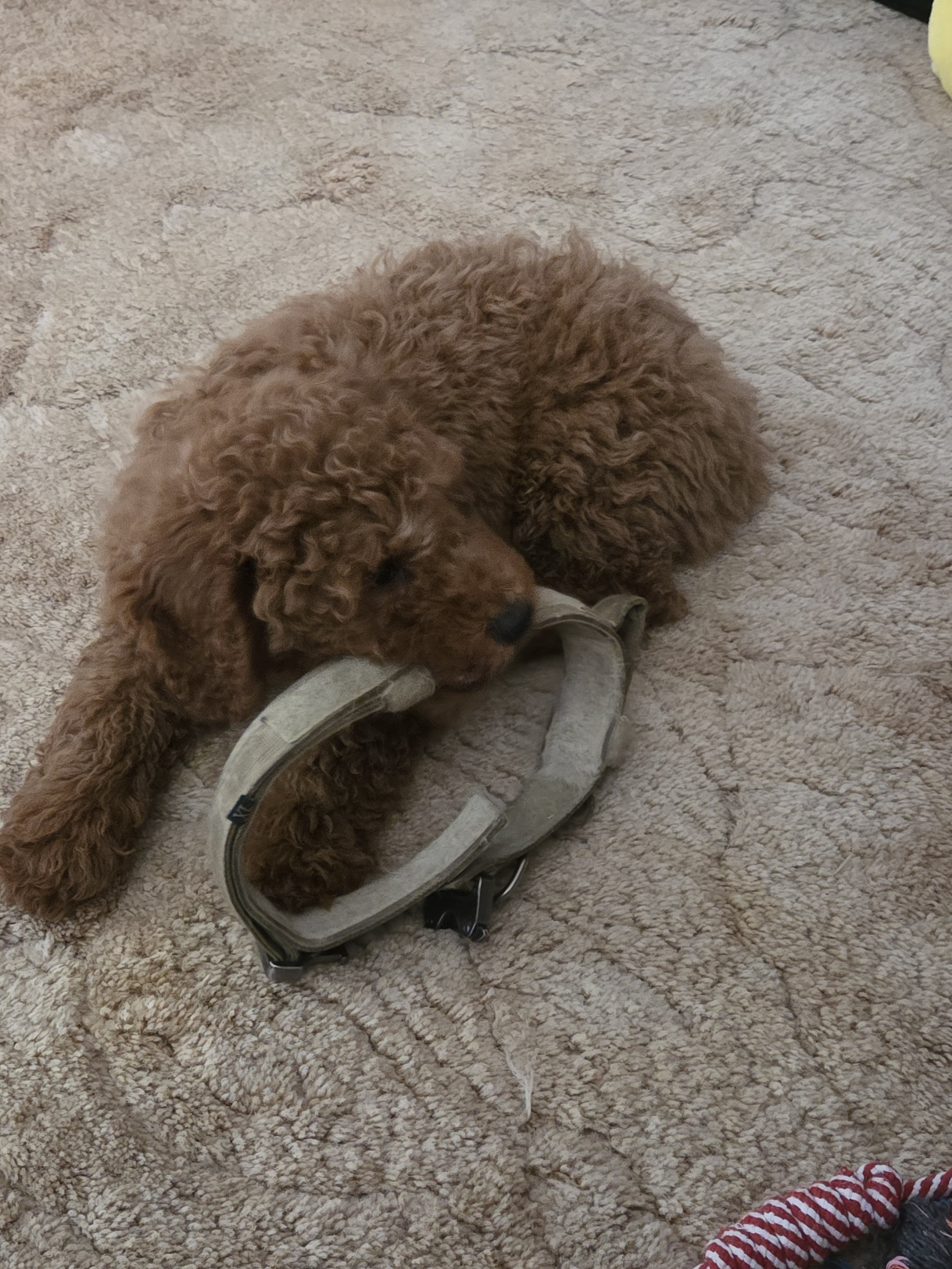
Charlie is 13 weeks old and is already a pro at being handled. This didn't happen by accident—it happened because we put in five minutes of work a day. Don't wait for your puppy to get sick to find out they are afraid of the vet. Start your cooperative care routine today, and check the Gear Page for the tools I use to make my "Mock Exams" as realistic as possible!