
Goldendoodle Separation Anxiety: How to Teach Your Puppy to Be Alone
Looking for the specific tools I use with Charlie? Check out my Master Gear Page for my top-rated Goldendoodle supplies, from grooming tools to training crates.
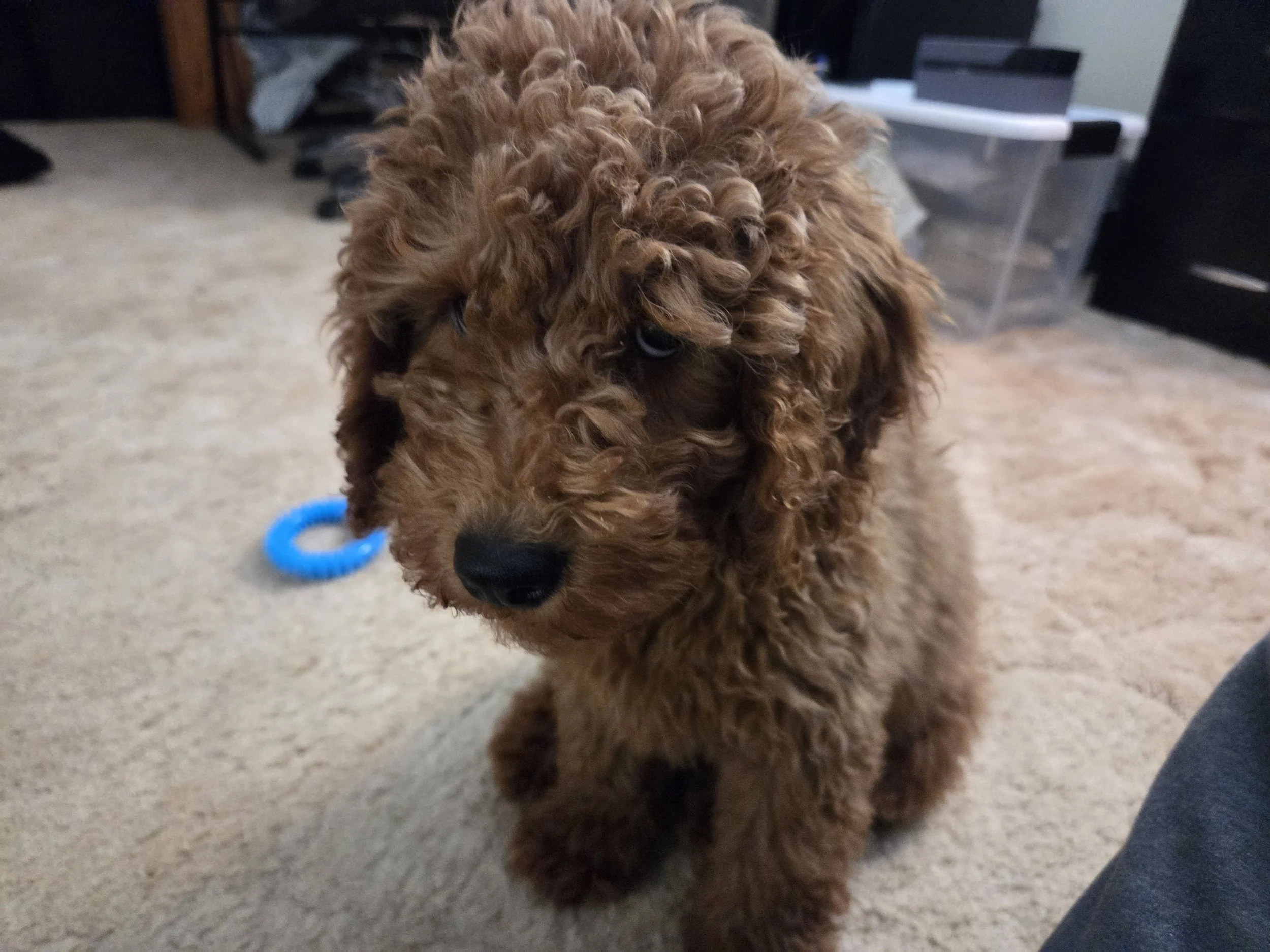
If you’ve done any research on Goldendoodles, you’ve likely heard the term "Velcro Dog." It’s one of their most endearing traits—they love their humans and want to be in the same room, if not on the same lap, at all times. However, as a professional breeder, I know that this deep bond can quickly turn into a debilitating disorder: Separation Anxiety. When Charlie first came home, his instinct was to cry the moment I stepped out of sight.
If I had catered to that crying, I would have raised a dog that couldn't handle the reality of human life. As much as I love Charlie, I cannot be with him 24/7. Teaching him that "Alone Time is Safe Time" is the greatest gift I can give him. Here is how I proactively prevented separation anxiety in my Mini Goldendoodle.
The "Velcro" Trap
The biggest mistake new owners make is taking their puppy everywhere during the first week. They take the puppy to the bathroom, they let them sleep in the bed, and they never leave them alone for a single second. Then, on Monday morning when the owner goes back to work, the puppy’s world collapses.
With Charlie, I started "Micro-Absences" on Day 2. I would put him in his crate or tethered area, walk out of the room for 30 seconds, and come back before he started to panic. I wanted him to learn a simple truth: I always come back.
Step 1: The "High-Value" Association
Alone time should never feel like a punishment. Every time Charlie goes into his crate or "Puppy Zone" for a session of independent time, he gets something he loves. I use the specific long-lasting chews and frozen enrichment toys listed on my Gear Page.
If Charlie is busy working on a frozen Kong, he barely notices that I’ve walked into the kitchen to make lunch. We are building a positive association: Human leaves = I get the best treat of the day.
Step 2: Practicing "Parallel Independence"
We don't just practice being alone when I leave the house; we practice it while I’m still there. As I discussed in my guide on Tether Training, Charlie spends time at my feet while I work. However, I also make sure he spends time in a different room while I am active elsewhere.
This prevents "hyper-attachment." If Charlie can hear me doing dishes in the next room but can't see me, and he remains calm, he is learning that he is safe even without physical contact. This mental stability is just as important as the physical health foundations we covered in [Spaying and Neutering].
Step 3: Varying the "Exit Cues"
Dogs are masters of observation. Charlie knows that when I grab my car keys and put on my shoes, I’m about to leave. For a dog with anxiety, these "cues" trigger a spike in cortisol before the human even walks out the door.
To de-sensitize these triggers, I "fake" my departure. I’ll grab my keys, put on my coat, and then sit on the couch and check my email. By doing this, I’m breaking the link between those sounds and the act of leaving.
Why Training Trumps "Comfort"
Many owners try to fix separation anxiety with "soothing" or by rushing back into the room the moment the dog whines. This actually rewards the anxiety.
I show you the exact "Silence for Reward" timing inside the Puppy Foundations module of my Goldendoodle Academy. For $45, I’ll show you how to read the difference between a "protest whine" and a "panic cry," and how to respond to both like a professional trainer. This is the same system I use to ensure every Ironstone puppy is prepared for their new home.
Final Thoughts
A confident dog is a happy dog. By teaching Charlie how to be alone at 13 weeks, I’m protecting his mental health for the next 15 years. It’s much easier to prevent separation anxiety now than it is to fix it later. Check out the Gear Page for the enrichment tools that make alone time a breeze, and remember: leaving your dog for a few hours is an act of love, not neglect.