
Best Puppy Food for Goldendoodles: Why I Chose Charlie's Diet
Looking for the specific tools I use with Charlie? Check out my Master Gear Page for my top-rated Goldendoodle supplies, from grooming tools to training crates.
If you look at the back of a dog food bag, it can feel like you’re reading a chemistry textbook. When I brought Charlie home, I knew that the food I chose for him during his first 12 months would dictate his health for the rest of his life. For a Mini Goldendoodle, nutrition isn't just about "filling the tank"—it’s about supporting joint health, brain development, and that iconic wavy coat.
As a professional breeder, I’ve done the deep dives into ingredient lists so you don't have to. Here is the criteria I used to choose Charlie’s diet and what you should look for in a high-quality puppy food.
The "Doodle" Nutritional Profile
Goldendoodles are active, intelligent dogs. Charlie, even at 13 weeks, has a high metabolic rate. He needs a diet that is calorie-dense but balanced.
High-Quality Protein: I look for a food where the first ingredient is a specific meat (like chicken, lamb, or beef), not "meat by-products." This provides the amino acids Charlie needs for muscle growth.
DHA for Brain Power: Since I’m training Charlie for high-level focus and agility, I ensured his food is rich in DHA (an omega-3 fatty acid). This supports cognitive development, making him easier to train.
Controlled Calcium and Phosphorus: For Mini Goldendoodles, growing too fast can be hard on their joints. A proper puppy formula ensures they grow at a steady, healthy rate.
Why I Avoid the "Boutique" Fad
There’s a trend toward exotic diets (like grain-free or raw) that aren't always backed by science. As a breeder, I stick to brands that perform rigorous feeding trials. I want to know that the food has been tested on thousands of dogs before it touches Charlie’s bowl.
I’ve linked the specific brand and formula I use for Charlie on my Gear Page. I also include the "Slow Feeder" bowl I use to prevent him from eating too fast, which can lead to digestive upset.
Transitioning Foods Safely
If you decide to change your puppy's food, you can't do it overnight. Goldendoodles are notorious for having "sensitive tummies." When I transitioned Charlie from the breeder's food to my preferred brand, I did it over 7 days:
Days 1-2: 75% old food, 25% new food.
Days 3-4: 50/50 mix.
Days 5-6: 25% old food, 75% new food.
Day 7: 100% new food.
This slow move prevented any "tummy troubles" and kept his potty training on track.
Proper nutrition is the fuel for development. See the results for yourself in Charlie’s Weekly Growth Chart and Weight Data.
Healthy Treats for Training
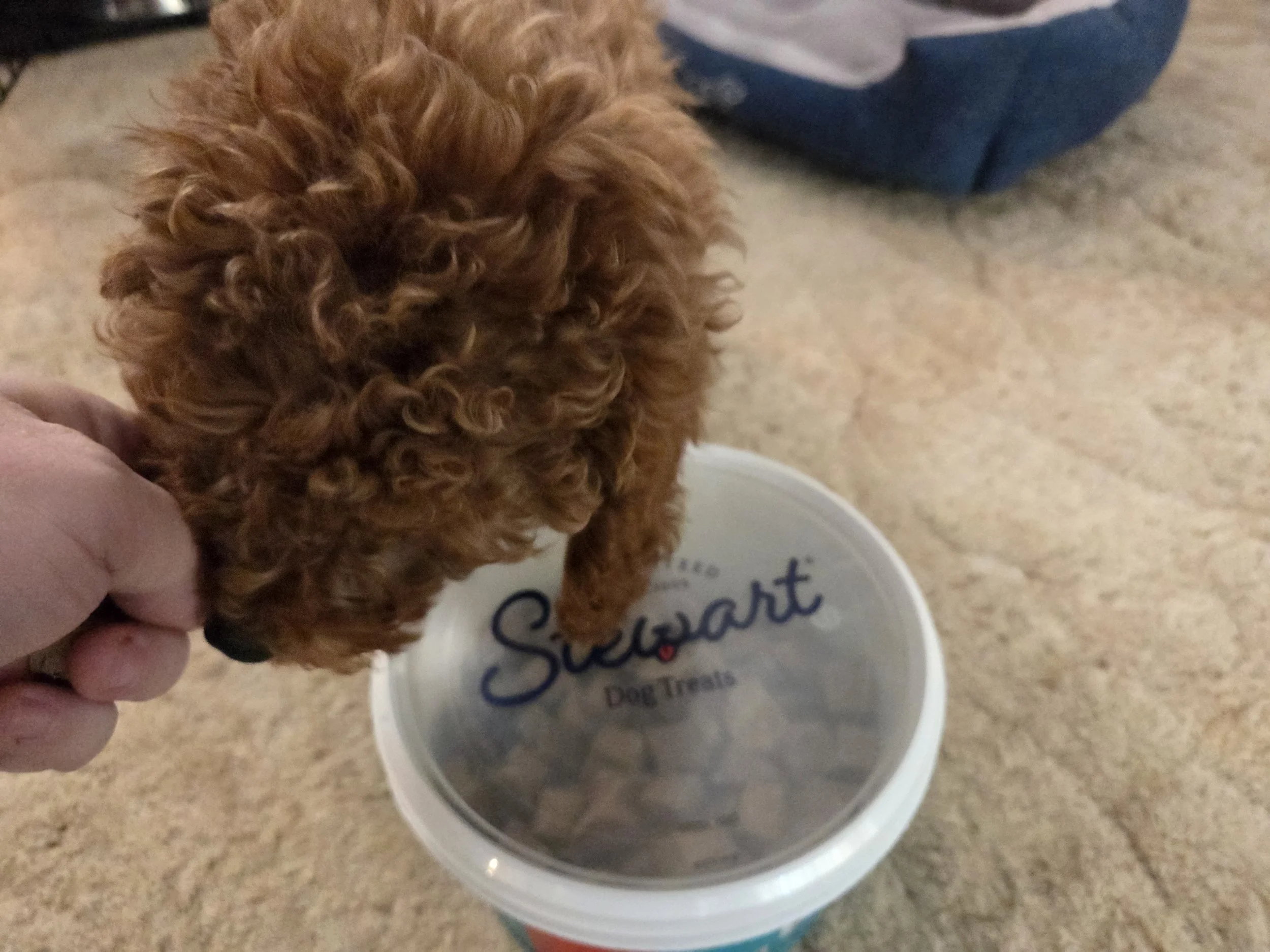
Food isn't just what’s in the bowl; it’s also what’s in my treat pouch. I use "single-ingredient" treats for Charlie's training sessions to ensure I’m not overloading him with fillers or sugar.
If you’re finding that your puppy is "stubborn" or loses interest in training, you might be using the wrong food motivation. I talk about how to use Charlie's daily meal allowance as a training tool in the Puppy Foundations module of my Goldendoodle Academy. For $45, I’ll show you how to make your puppy work for their food so they stay lean, healthy, and focused.
Final Thoughts
You are what you eat, and the same goes for Charlie. By investing in high-quality nutrition now, I’m saving myself thousands in vet bills later. Check out my Gear Page for my top-tier food recommendations, and remember: a healthy puppy is a happy (and easier to train) puppy!