
Goldendoodle Potty Training Schedule: How I Trained Charlie
Looking for the specific tools I use with Charlie? Check out my Master Gear Page for my top-rated Goldendoodle supplies, from grooming tools to training crates.
As a breeder, the number one question I get from new owners is: "How do I stop the accidents in the house?" My answer is always the same: A puppy is only as reliable as your schedule. When I brought Charlie home, he didn't have a "potty problem"—he had a "learning the routine" opportunity.
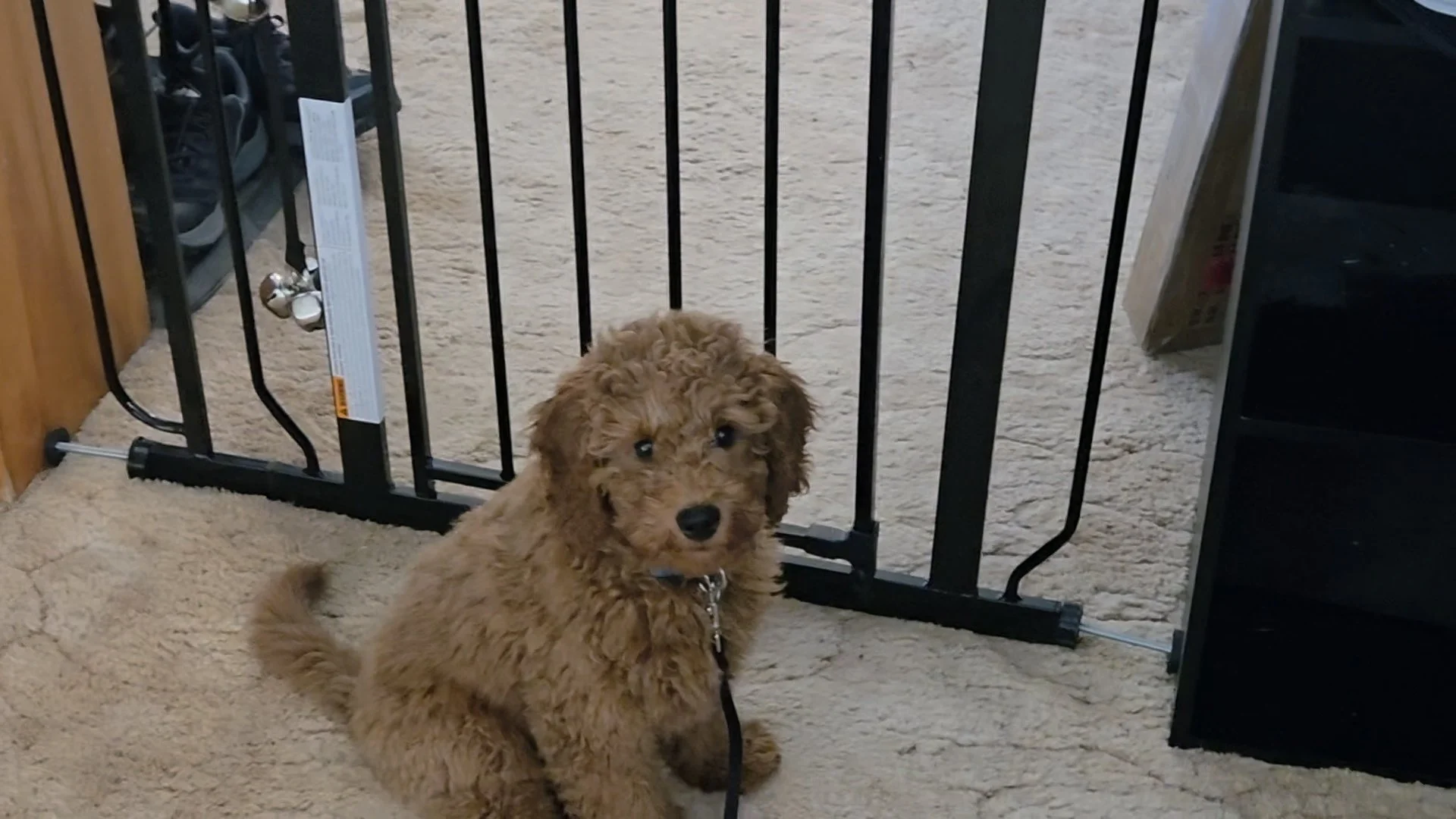
At 13 weeks old, Charlie is now 100% reliable in the house, but that didn't happen by accident. It happened because I followed a professional, hour-by-hour roadmap that removed the guesswork for him. Here is the exact schedule I used to house-train my Mini Goldendoodle.
The "Golden Rule" of Puppy Potty Breaks
Before we look at the clock, you have to understand the Triggers. A puppy’s bladder is stimulated by three things:
Waking up (even from a short nap).
Eating or drinking.
Physical play.
If one of these three things happened, Charlie was outside within 60 seconds. No exceptions.
Charlie’s Hour-by-Hour Schedule
During the first few weeks, our day looked like this:
6:00 AM: Wake up. Straight from the crate to the grass. No stops for coffee, no stops to check my phone.
6:15 AM: Breakfast and water.
6:30 AM: Back outside. The act of eating pushes on the colon; they almost always need to go 15 minutes after a meal.
7:00 AM – 8:30 AM: Supervised play or "Place" work.
8:30 AM: Potty break and then into the crate for a nap.
10:30 AM: Wake up and straight outside.
12:00 PM: Lunch and water.
12:15 PM: Outside again.
We repeated this cycle every 2 hours until bedtime. It sounds exhausting, but by being this "extreme" for the first 14 days, Charlie learned that the only place he relieves himself is on the grass.
The Tools of the Trade
You cannot potty train a puppy if they have free roam of your house. If I couldn't have my eyes on Charlie, he was in his "Puppy Zone" or his crate.
I also made sure I had the right cleanup tools for the inevitable "human error" mistakes. If a puppy smells a previous accident, they will go there again. I’ve linked the specific enzyme cleaner I trust, along with the high-quality bells I taught Charlie to ring when he needs to go, on my Gear Page. These aren't just gadgets; they are communication tools.
Handling Accidents Like a Pro
When Charlie did have an accident in the house early on, I didn't scold him. If you yell at a puppy for peeing, they don't learn that peeing inside is wrong; they learn that peeing in front of you is dangerous.
Instead, I’d quietly clean it up and realize that I had missed his signal. I’d then adjust my schedule to be 15 minutes faster next time.
A good schedule builds the foundation for more advanced safety commands like the Stay vs. Wait Distinction.
The "Potty Blueprint"
If you’re feeling like a slave to your puppy’s bladder, or if you’ve been "training" for weeks with no progress, you likely have a gap in your management.
I’ve created a complete "Potty Blueprint" inside the Puppy Foundations module of my Goldendoodle Academy. For $45, I give you the printable schedules, the nighttime survival guide, and the specific steps to get your pup to tell you when they need to go. It’s the same system I use for every dog I breed and train.
Final Thoughts
Potty training is a test of your consistency, not the puppy’s intelligence. Charlie is a smart boy, but he only succeeded because I gave him a schedule that made it impossible for him to fail. Stick to the clock, watch for the triggers, and stay the course!