
Stay" vs. "Wait" for Puppies: The Difference That Could Save Your Dog's Life
Looking for the specific tools I use with Charlie? Check out my Master Gear Page for my top-rated Goldendoodle supplies, from grooming tools to training crates.
If you walk into most dog parks, you’ll hear owners yelling "Stay!" as their dog bolts out of the car or "Stay!" as they put down a food bowl. As a professional breeder and trainer, this is one of my biggest pet peeves. Why? Because "Stay" and "Wait" are two completely different concepts in a dog’s mind.
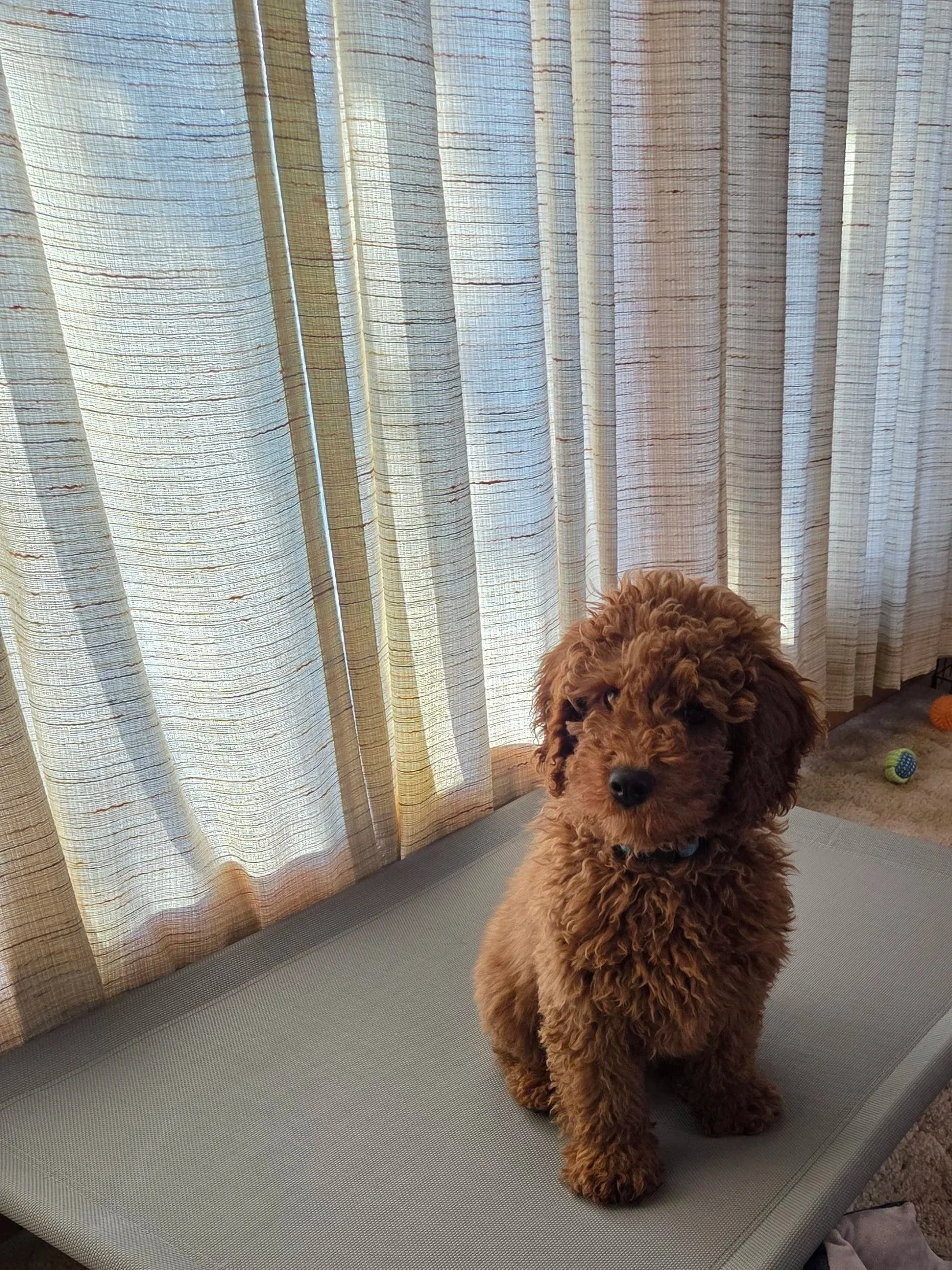
With Charlie, I started teaching the difference between these two commands during his very first week home. It’s not just about being "fancy" with training; it’s about safety. One of these commands is for convenience, but the other could literally save his life.
The Breakdown: What’s the Difference?
I like to keep it simple for my 13-week-old Mini Goldendoodle. Here is the professional distinction I use:
"Stay" means: "Do not move from this exact spot until I return to your side and release you." It is a "terminal" command. If I tell Charlie to stay, I am the one who moves, and I am the one who comes back to him.
"Wait" means: "Pause for a second until I give you the release to move forward." It is a "transition" command. It’s a temporary boundary that ends with him moving toward me or through a door.
Why "Wait" is a Life-Saver
We use "Wait" more than any other command in our daily routine. I use it at the front door, the car door, and before Charlie is allowed to eat his dinner.
Before I taught Charlie "Wait," his instinct was to bolt the second a door opened. For a small puppy, that is incredibly dangerous. Now, Charlie sits at the threshold and "waits" for my release command ("Break!"). This ensures he never runs into a parking lot or a street without me.
To make this training easier, I use a specific slip-lead and high-value training treats that I’ve listed on my Gear Page. When you’re teaching boundary safety, you need gear that gives you clear communication and treats that keep the puppy’s focus entirely on you.
Safety starts at home. If you missed it, check out my guide on Puppy Nipping and How I Stopped Charlie.
When I Use "Stay"
I use "Stay" when I need Charlie to remain in a fixed position while I move away. For example, if I need to go to the other side of the room to pick up a dropped toy or if I’m practicing his distance work.
A true "Stay" is mentally taxing for a puppy. At 13 weeks, Charlie can hold a solid "Stay" for about 30 seconds while I walk 10 feet away. If I were to use "Wait" here, he would expect to eventually run to me. But with "Stay," he knows he has to wait for me to come back to his side to reward him. This builds massive impulse control and patience.
Confusing the Commands = Confusing the Puppy
If you use "Stay" for everything, your puppy will eventually start breaking their stay because they think they’re supposed to move toward you eventually. This weakens your emergency "Stay."
In my Goldendoodle Academy, specifically within the Puppy Foundations module, I show you the exact hand signals and body language I used to help Charlie distinguish between these two. For $45, you get the video drills that prevent this common confusion. Mastering the "Wait" at your front door is the first step to having a dog you can trust anywhere.
Final Thoughts
Training is about clarity. By giving Charlie two separate words for two separate actions, I’ve made his world easier to navigate. He knows when he needs to be a "statue" (Stay) and when he just needs to "pause" (Wait). Start practicing at your doorways today—it’s the best way to keep your Goldendoodle safe and focused.